Understanding concrete slab forms and removal timing
What concrete forms are and their purpose in poured slabs
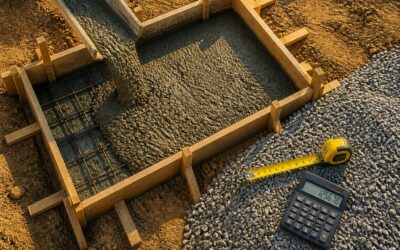
Great formwork can shave days off a build; as a veteran foreman quips, ‘Formwork is the stage where concrete performs.’ Slab forms do the heavy lifting before the pour sets. Understanding concrete slab forms and their purpose helps plan the project and avoid headaches on pour day. Knowing when to remove concrete slab forms is part of planning.
- Define shape and thickness for a clean boundary.
- Contain the wet mix and support it during initial set.
- Provide edge definition for joints and finishes.
Removal timing hinges on curing, weather, and mix strength. In South Africa, climate swings—from heat to humidity—shape expectations. Forms must hold until the concrete is ready, then release for a smooth, honest finish.
Key factors that influence removal timing
South Africa’s climate can turn a simple pour into a calendar disaster, and that makes the timing of slab forms more than a convenience!
In practice, slab forms are designed to shape and contain the wet mix during initial set, while edges and joints define the finish. The right timing balances a clean boundary with a smooth release, preserving both appearance and structural intent.
- Curing status and concrete strength development
- Ambient conditions: heat, humidity, wind
- Slab thickness and formwork type
- Edge definition and joint continuity
When weather swings bite, formwork must hold until the concrete can resist release, then the finish remains honest and true—without the drama of premature form pullout.
Typical form removal windows for residential vs commercial slabs
Concrete slab forms shape and shield the wet mix; the moment to pull them away is a quiet negotiation between strength and surface. Understanding when to remove concrete slab forms keeps boundaries clean and the release humane.
In South Africa, climate swings—hot sun, humidity, wind—turn a simple pour into a calendar event. The right timing balances a crisp finish with a clean pull, preserving both appearance and structural intent.
- Residential slabs: typically in the 2–5 day range, balancing early strength with surface clarity
- Commercial slabs: commonly a longer window, roughly 5–14 days, to tolerate larger pours and heavier loads
The result is a slab that reveals its boundary with minimal drama and maximum integrity; a small act that defines the whole project.
Risks of premature removal and delayed stripping
In a brisk South African morning, the pour whispers a future of smooth edges and clean lines. Understanding when to remove concrete slab forms is a tightrope walk between surface fidelity and structural intent; pull too soon and you invite misalignment, pull too late and you trade formwork life for stubborn resistance!
- Premature removal can cause surface blistering, edge roughness, and misalignment of exposed edges.
- Delaying stripping may trap moisture, extend cure times, and complicate finishing operations later.
- Weather-induced stress: heat, wind, and humidity can still distort the slab if forms linger beyond their prime window.
The moment sits in the air like a countdown; the right balance protects appearance and load paths without drama.
Strength, curing, and testing milestones for removal decisions
Curing time vs. strength development basics
South Africa’s climate can turn a fresh slab into a living sculpture, where heat and moisture dictate curing’s pace. Understanding when to remove concrete slab forms is essential, for the formwork acts as a patient tutor, shaping strength without shouting.
Strength grows in stages. Curing time bends hydration into form, and early gains surface within the first week, while the 28-day mark reveals the slab’s true backbone. Testing milestones offer a window—cylinder checks and non-destructive gauges whisper whether the form can step aside.
- Early-age strength tests (3–7 days) indicate readiness for light loads.
- Non-destructive tools (rebound hammer, ultrasound) assess uniform curing.
- 28-day strength confirmation anchors final removal decisions.
In South Africa, field judgments align with local standards and the supervising engineer’s insight, keeping the slab poised for the next phase as the landscape keeps turning.
How and when to perform strength testing (ACI/ASTM guidelines)
Strength development unfolds at its own pace, and SA’s climate adds intensity to the equation. Understanding when to remove concrete slab forms hinges on tested milestones and the supervising engineer’s judgment. Follow ACI and ASTM benchmarks—cylinder tests per ASTM C39, sound curing, and occasional non-destructive checks—to gauge readiness.
- Early-age tests at 3–7 days indicate whether light loads are acceptable.
- Non-destructive tools like a rebound hammer or ultrasound gauge assess uniform curing.
- 28-day strength confirmation anchors the final removal decision and form stability.
In practice, field judgments align with local standards and the supervising engineer’s insight, with the landscape turning as the slab settles. This measured approach keeps you on the right side of safety and performance while respecting project timelines.
Interpreting compressive strength results for removal readiness
In South Africa’s busy building sites, strength is a patient art that grows with time. As a veteran builder reminds us, ‘Strength is a habit learned day by day.’ The question of when to remove concrete slab forms hinges on tested milestones and the supervising engineer’s eye, especially under our climate where heat and wind shape curing.
Turn to tested benchmarks: cylinder results under ASTM C39, sound curing, and occasional non-destructive checks to read the slab’s inner mood. The 28-day strength anchors the removal decision, with form stability resting on a steady, documented growth in strength. This underpins when to remove concrete slab forms.
Milestones arrive as a simple sequence:
- Early indicators of uniform curing
- Non-destructive readings aligning with maturity
- 28-day strength confirming stability
In South Africa, interpretation blends data with judgment—the final call rests with the supervising engineer.
Impact of weather and mixing on cure and strength
On South African sites, a single 30-degree day can shave days off cure, and the shade under a corrugated roof becomes a luxury. Strength, like good manners, matures with time and temperature; a well-behaved slab refuses to brag before its due respect.
Weather and mixing are the fickle choreographers of cure. Heat drains moisture; wind accelerates evaporation; a capricious water-to-cement ratio can blunt gains. When the mix cooperates, the slab’s inner mood softens into steady, quiet strength—read by the eye as much as by measure.
The pathway to a prudent decision rests with data and judgement. The 28-day horizon anchors the conversation, complemented by cylinder results under ASTM C39, sound curing, and periodic non-destructive checks. These signals, interpreted in our climate, help answer when to remove concrete slab forms.
- Seasonal temperature swings and humidity patterns
- Consistency of cure across the slab and formwork
- Correlation between non-destructive readings and the 28-day strength trajectory
Manufacturer and local code guidance you should follow
On South African sites, a single 30-degree day can shave days off cure, and the shade under a corrugated roof becomes a luxury. The question of when to remove concrete slab forms is livelier than most office debates: strength, like good manners, matures with time and temperature, and a slab won’t brag until it has earned quiet confidence.
The milestones are clear when reading the slab’s temperament across curing days:
- Four-week strength as the practical horizon, aligned with design requirements
- Cylinder test results per ASTM C39 for confirmed compressive strength
- Non-destructive readings to track cure uniformity and early distress signals
Manufacturer guidance and local codes in South Africa shape the answer to when to remove concrete slab forms. The data, climate, and judgment blend into a readiness signal—read as much by eye as by chart—and they steer the rhythm of form removal with measured patience.
Site safety, preparation, and workflow for form removal
Safety protocols and PPE for workers
Site safety begins long before the first form is touched. A concise job brief, cordoned zones, and a clear line of sight prevent near-misses as the forms come off and the slab settles. Knowing when to remove concrete slab forms is part of a disciplined plan that protects crews and projects.
Preparation hinges on form stability checks, tool readiness, and a quick crew briefing on roles. Safety protocols and PPE should be in place before detaching forms to minimize risk. In South Africa, adherence to local safety norms matters. PPE essentials include:
- Hard hats and eye protection
- Gloves and high-visibility clothing
- Steel-toe boots and hearing protection
Workflow should be calm and coordinated: verify anchorage, assess movement space, and maintain clean decks to prevent trips. Clear communication helps everyone stay aligned as the forms are removed and the slab begins its final cure.
Protecting adjacent surfaces and utilities during stripping
Timing is everything after the pour. One mis-timed strip can transform a solid slab into a costly lesson in patience. In South Africa, this moment’s precision sets the tone for safety, workflow, and the slab’s final cure.
Site safety remains the backbone—clear zones, steady communication, and respect for surrounding utilities as stripping begins. Protecting adjacent surfaces and utilities during stripping isn’t merely prudent; it’s a safeguard against unplanned damage and expensive repairs. Local norms in South Africa shape how teams coordinate and document each move.
Preparation underpins a smooth handoff: stability checks, tool readiness, and a concise crew briefing help the project stay on track without drama. Knowing when to remove concrete slab forms is the hinge of a disciplined plan that keeps workflows aligned with curing timelines.
Equipment and crew coordination for efficient removal
On South African job sites, timing the strip is a quiet act with loud consequences—mis-timing can waste hours and bump costs by up to 20%. Precision in the moment shapes safety, workflow, and the slab’s final cure.
Site safety remains the backbone—clear zones, steady communication, and respect for surrounding utilities as stripping begins. Protecting adjacent surfaces during stripping guards against damage and costly repairs.
Preparation underpins a smooth handoff: stability checks, tool readiness, and a concise crew briefing help the project stay on track. Knowing when to remove concrete slab forms guides curing timelines.
Equipment and crew coordination for efficient removal rests on clear roles, synchronized movements, and reliable communication.
- Clear lines of communication
- Defined roles and handoffs
- Equipment readiness checks
Waste handling, disposal, and form recycling considerations
Site safety remains the quiet backbone of form removal. Clear zones, steady communication, and vigilance for buried cables keep the rhythm calm even as concrete breathes nearby. PPE, signage, and disciplined movement minimize missteps that turn efficiency into chaos on a South African site.
Preparation and workflow hinge on timing and readiness. Stability checks, tool readiness, and a concise briefing align the crew, shaping a smooth handoff when decisions about when to remove concrete slab forms must fit the schedule. Weather, curing progress, and structural observations whisper a verdict long before the strip begins.
Waste handling, disposal, and form recycling considerations shift from afterthought to ethic. Segregating waste, partnering with recyclers, and exploring form reuse reduce waste and save costs. For the on-site flow, consider these options:
- Reuse forms where possible
- Coordinate with local recycling facilities
- Ensure licensed waste transport and disposal
Post-removal inspection and temporary protection steps
Across South Africa’s bustling sites, formwork decisions choreograph the day’s tempo; mis-timed stripping can cost days. The critical moment of when to remove concrete slab forms shapes the entire sequence, rewarding patience with a calm rhythm rather than a noisy rush. I’ve watched crews breathe, steady as a metronome, as load and cure settle into cooperation.
Site safety remains the quiet backbone. Clear zones, steady communication, and vigilance for buried cables keep the tempo; even as the slab exhales nearby, order holds. Preparation unfolds with stability checks, tool readiness, and a concise briefing that aligns the crew for the moment of truth.
Post-removal inspection reveals surface texture, edge integrity, and any residual marks. Temporary protection shields exposed faces as the site shifts toward the next phase. A simple log of observations supports decisions and keeps stakeholders in the know.
Removal timing by project type and application considerations
Residential slabs, driveways, and patios timing standards
Timing is everything when removing concrete slab forms. Understanding when to remove concrete slab forms is a balance of project type and on-site conditions, with residential slabs, driveways, and patios each presenting distinct timing considerations.
- Residential slabs: removal typically follows a stable set with minimal surface movement, protecting the finish while avoiding edge damage.
- Driveways: longer form retention helps resist wheel path cracking and supports early load distribution.
- Patios: timing can be more flexible, emphasizing surface texture and decorative joints over haste.
Weather, humidity, and cure rate influence the readiness window, so plan around dry spells and recent rainfall to keep forms intact and surfaces pristine.
Commercial slabs and high-traffic areas timing considerations
Commercial projects demand a precise tempo, and the key question is when to remove concrete slab forms. Across South Africa’s bustling sites—from Johannesburg’s inner-ring developments to Durban’s harbourfront warehouses—timing blends strength, load expectations, and crew logistics. For high-traffic surfaces, getting this window right keeps joints aligned and finishes pristine.
In commercial slabs and high-traffic areas, forms stay in place longer to resist wheel loads and support early load distribution. The plan must accommodate forklifts, delivery trucks, and daily foot traffic, with patience that protects long-term surface integrity even amid tight project schedules. That balance hinges on when to remove concrete slab forms.
Consider these factors when planning removal timing for commercial projects:
- Expected traffic loads and duration
- Concrete mix and early strength targets
- Joint layout, texture, and finish requirements
- Site access and equipment for stripping
Industrial slabs with heavy loads and equipment access
A plant runs on timing—the kind that turns wheels to profit and delays into debt. For industrial slabs bearing heavy loads and constant equipment access, removal timing by project type and application considerations is more than a calendar entry; it is the hinge between throughput and long-term surface health. Across South Africa’s bustling yards—from Johannesburg’s warehouses to Durban’s logistics hubs—the window must speak to wheel loads, early strength gains, and the choreography of the crew, ensuring a surface that endures.
- Sustained traffic loads and duration
- Concrete mix and early strength targets
- Joint layout, texture, and finish requirements
- Site access and stripping equipment constraints
Special case: insulated or post-tensioned slabs and their unique timelines
Understanding when to remove concrete slab forms is a hinge between throughput and surface health. In South Africa’s bustling yards—from Johannesburg to Durban—the window isn’t a calendar tick but a negotiated pace, balancing wheel loads, early strength, and crew choreography to yield a surface that endures.
Special case: insulated or post-tensioned slabs bring unique timelines to the removal decision. Consider these high-level factors:
- Insulated slabs: the insulation layer and backfill affect heat retention and curing dynamics, nudging the readiness window without dictating a fixed day.
- Post-tensioned slabs: tendon work and grout curing create a different rhythm for demolding, requiring alignment with the tensioning crew and safety buffers.
- Weather and cure: climate variance across SA—dry heat, coastal humidity—modulates surface stability for these systems.
Across SA’s varied climates, project type—industrial, commercial, or residential—speaks softly about form removal timing. The forms cradle a patient glow, then yield to a surface grown wise with time.

0 Comments