Foundational concepts for slab construction
Site assessment and soil prep
Foundations set the tone for any structure; a weak start echoes for decades. In concrete slab building, the ground decides the performance. These foundational concepts for slab construction are simple in theory but ruthless in execution. In South Africa, up to 30% of early maintenance costs trace back to slab foundations with compromised soil prep.
Site assessment and soil prep are the quiet detectives of slab performance. We weigh soil type, bearing capacity, moisture regime, drainage potential, and anticipated loads to forecast how the slab will settle and respond to time—the ground never lies!
- Soil type and bearing capacity
- Moisture regime and drainage characteristics
- Anticipated loads and settlement potential
When the ground speaks, I listen—and let the design reply. This balance between earth and engineered slab shapes every room with a stubborn, patient strength.
Soil stabilization and drainage planning
In South Africa, up to 30% of early maintenance costs trace back to slab foundations with compromised soil prep. Foundational concepts for concrete slab building hinge on stabilizing the ground and guiding water away before the concrete cures. The ground speaks; the slab answers with quiet, enduring strength.
- soil stabilization to improve bearing and limit differential settlement
- drainage planning that diverts moisture away from the slab
- moisture barriers and careful subgrade preparation
Foundational stabilization starts with the right mix and proper compaction. We want a platform that resists settlement and cracks.
Drainage isn’t an afterthought but a lifeblood. Slope away from the house, install edge drains, and design capture trenches for seasonal rains.
Designed with care, the ground guides the slab toward durability.
Slab types overview and selection
The ground speaks; the slab answers. For South Africa’s homes, foundational choices become daylight and drought—quiet decisions that keep walls true and doors from sticking. A veteran craftsman puts it this way: the right slab is a quiet partner that bears what follows.
In concrete slab building, seasoned builders weigh soil condition, anticipated loads, and climate to pick a type that ages gracefully. A well-chosen slab guides moisture, resists cracking, and keeps future maintenance low.
- Slab-on-grade (monolithic): simple to pour, cost-effective, ideal where the ground is reliably stable.
- Ribbed or beam-and-slab: adds strength for modestly weaker soils and larger rooms.
- Waffle or hollow-core slab: light on weight, great for longer spans and even weight distribution.
Choosing wisely is choosing longevity—structures that endure the Karoo sun and coastal winds.
Codes, permits, and inspections
Foundations keep the horizon straight, a quiet verse in stone. A veteran mason from the Karoo reminds us that foundations are the spine of concrete slab building; when the codes are respected, the house breathes with stability and doors stay true!
Codes, permits, and inspections form the governance of every slab. National Building Regulations and local authorities provide the rhythm, guiding plan approvals, structural endorsements, and compliance checks that cradle the pour.
- Local municipality plan approvals
- Structural engineer sign-off
- Compliance with SANS 10400 standards
- Inspections at milestone stages
This framework anchors the concrete slab building against shifting soils and coastal winds, turning potential tremors into quiet endurance. The narrative of the foundation becomes the spine of every room, a reminder that good governance yields timeless, enduring form.
Design considerations for slab foundations
Load calculations and thickness guidelines
Concrete slab building isn’t glamorous, but it’s where the weight of your plans meets the reality of the ground. A seasoned designer will tell you a slab’s life hinges on the load path and proper thickness. “A slab is only as honest as its load path,” a fellow engineer likes to say, and he isn’t wrong. Build with the numbers, not vibes alone.
Key design considerations flow from fundamental loads and movement. The factors to weigh include:
- Dead load: the structure, fixtures, and finishes
- Live load: occupancy and equipment
- Soil bearing capacity and moisture movement
- Control joints to curb cracking and accommodate expansion
For thickness guidelines in South Africa, residential slabs typically sit around 100 to 125 mm, with heavier loads pushing to 150 mm. Choose a concrete strength grade such as C25/30 or C30/37, and ensure solid subgrade preparation, proper curing, and sensible reinforcement. Get these basics right and the slab stands up to daily life without drama.
Reinforcement options and placement
“A slab is only as honest as its load path.” In concrete slab building, that truth makes reinforcement and placement the quiet actors in long-term performance. The goal is simple: keep cracks small, move stresses where they belong, and maintain a clean balance between cost and capacity.
Reinforcement options and placement matter, especially for residential and light commercial slabs. Consider these approaches, aligned with your load path and movement expectations:
- Rebar grids that run with the expected stresses across the slab plane
- Welded wire mesh for economical crack control
- Fibers to supplement cracking resistance where traditional reinforcement is limited
- Post-tensioning for longer spans or higher load demands
Whichever route is chosen, it will shape how the slab behaves under daily use and over time, turning plans into a durable floor that stays honest with the ground.
Isolation and control joints planning
Movement under sun and shade keeps a building honest. In South Africa, cracks often trace to joint layout, a quiet signal that something essential was overlooked. In concrete slab building, design begins with where the joints sit—at walls, transitions, and edges—so the ground can move without turning life into a headache.
Isolation and control joints regulate the dance between fixed elements and flexible floors. Plan around thermal expansion, shrinkage, and seasonal moisture, letting joints define pathways rather than random crack patterns. The right joint strategy keeps the slab narrating the same load story year after year.
Movement is the truth of the ground, not its enemy. The choreography of joints quietly shapes durability, turning everyday use into a grounded performance that the earth itself remembers.
Moisture barriers and thermal considerations
In concrete slab building, design begins with moisture management and a practical thermal plan. Ground dampness quietly governs cracking and long-term comfort, so a robust vapor barrier under the slab, paired with selective insulation, keeps interior surfaces stable through South Africa’s temperature swings. Edge insulation and thermal breaks reduce heat exchange with the earth, letting the slab behave like a well-trained stage manager rather than a fidgety actor in the sun. The result is durable, predictable performance.
- Vapor barrier under the slab to block capillary rise
- Damp-proof or moisture-retardant membranes at the perimeter
- Edge insulation and, where feasible, under-slab insulation to minimize thermal bridging
Design options at the barrier and insulation frontier include:
These choices curb moisture ingress and temper temperature swings with quiet confidence.
Materials and equipment for pouring slabs
Concrete mix design and additive choices
Durability in concrete slab building hinges on the exact mix and the tools that shape it. In South Africa’s climate, the right batch prevents cracks and moisture issues from day one!
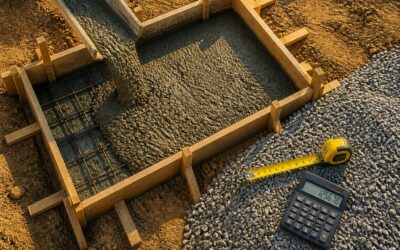
Materials and equipment for pouring slabs are the unsung heroes of every job. Here are essentials that keep a concrete slab building steady and true:
- Cementitious materials (Portland cement, fly ash)
- Aggregates (sand and gravel)
- Water and admixtures (plasticizers, set-retarders)
- Mixing gear (cement mixer, blades)
- Finishing and curing tools (floats, trowels)
Concrete mix design and additive choices tailor workability, strength, and finish. Fly ash, slag, and silica fume can reduce heat and shrinkage, while superplasticizers improve flow. In line with local standards, selecting appropriate cement and aggregates supports long-lasting performance in SA climates and the broader concrete slab building.
Reinforcement materials and placement
The backbone of every pour is the reinforcement that keeps a slab honest through heat, fatigue, and ground shifts. Materials like rebar, welded wire mesh, and discrete fibers form a grid that fights cracks before they start, while chairs and spacers hold essential cover steady.
Key reinforcement materials and placement essentials:
- Rebar, typically Grade 420 or 500, spaced to suit slab thickness
- Welded wire mesh for quick, continuous coverage
- Steel and synthetic fibers to reduce shrinkage cracking
- Chairs and spacers to maintain cover and alignments
Pouring gear follows the same rhythm—mixers, pumps or wheelbarrows, vibration tools, screeds, floats, and trowels—together delivering a smooth, true surface for concrete slab building in South Africa’s climate.
Vapor barriers, damp proofing, and insulation
Moisture is the silent saboteur of concrete slab building—one rogue droplet can ripple into cracks and puffed edges. In South Africa’s climate, where heat and humidity clash, moisture control isn’t optional; it’s survival.
Vapor barriers, damp proofing, and insulation stand as the three musketeers guarding your pour. A thin vapor barrier laid on the prepared subgrade with clean overlaps keeps moisture where it should be; damp-proofing membranes protect vulnerable edges; insulation under the slab curbs heat loss and thermal bridging, essential for chilly mornings.
- 6-mil polyethylene vapor barrier with taped seams
- Damp-proofing membrane at critical edges
- Under-slab insulation such as EPS/XPS boards
- Moisture- and heat-resistant sealants for seam protection
Pair these with site-appropriate materials, and you’re shaping a durable foundation that sticks around longer than a stubborn South African sunset.
Tools, forms, and equipment setup
Every pour has a quiet deadline: the right tools set the tempo, or the slab sighs under the weight of its own mistakes. In concrete slab building, you’ll feel the difference the moment the mixer hums, the screed slides cleanly, and forms square up without battle.
Key equipment isn’t fancy, it’s reliable. Here’s a compact toolkit that stays sharp on a South African site:
- Concrete mixer or pedal mixer for consistent batch work
- Steel or timber forms with bracing
- Screed board and float for flatness
- Magnesium trowel for finish
- Laser level or water level, chalk line
I rely on these on every pour.
Beyond the basics, fast setup and correct alignment keep moisture and temperature from sabotaging the pour. Good gear turns a moment into a memory of durability.
Quality control and curing indicators
Material choices for pouring slabs determine the day’s finish; in concrete slab building, the mix balance of cement, aggregate, and water carries the load and the weather. On South African sites, ambient temperatures swing, so fresh mix temperature and workability guide the pace before curing even begins.
- Slump test cone and accessories to gauge workability
- Vibrator or poker for consolidation
- Thermometer or infrared probe for concrete temperature
- Moisture meter and curing options (membrane, blankets)
Quality control and curing indicators speak softly yet truthfully. A uniform surface sheen and a steady early strength gain point to a healthy cure, while uneven moisture loss or microcracks reveal stress from temperature or drying.
Construction process and best practices
Site layout, formwork setup, and alignment
In concrete slab building, precision hinges from the first stake to the final pour. A clean site layout keeps machinery, materials, and crews moving with purpose, cutting delays and waste. In South Africa, even small misalignments can ripple into costly remediation; a 5 mm error can become 20 mm over a 4 m bay. Alignment and control start long before the mixer rolls.
Formwork setup and alignment follow the layout. Edge forms and corners must hold true under load. Brace forms securely, and check for square against established datum lines.
- Set edge forms at measured offsets.
- Brace to resist movement and maintain level.
- Verify corners are square at each bay.
- Confirm datum lines run true along the length.
A disciplined approach to formwork reduces finish flaws and supports durable performance for the structure on site.
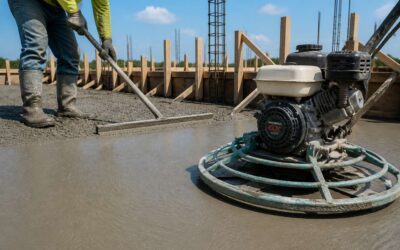
Pouring, screeding, and consolidation techniques
In concrete slab building, a rhythm—pouring, screeding, and consolidation must align like a well-rehearsed team. In South Africa, a 5 mm error can become 20 mm over a 4 m bay, a reminder that intent travels from the forms to the finish. I’ve learned that small missteps haunt the final surface; “Pour with intent,” a veteran might whisper, because every micro-variation compounds and speaks to the final hardness of the floor.
During the pour, keep momentum steady and the mix mobile, while the surface holds its flat truth through careful screeding and controlled consolidation.
- Pouring sequence and coordination to avoid segregation
- Controlled screed passes to bring the surface true without overworking
- Internal consolidation to release entrapped air
Those choices, executed with quiet discipline, illuminate the character of the finish—durable, flat, and ready to meet the South African climate.
Finishing options and timing strategies
Every surface tells a story, and in concrete slab building the finish is the narrator! Across South Africa, the finish must resist heat, shrinkage, and wear while staying true to its form. Finishing options span from satin-smooth to vibrantly brushed textures and even gentle polishes, each carrying a mood and a purpose. Timing strategies depend on the day’s temperament—temperature, humidity, and wind shape when the surface meets its cure and its future protection.
Finishing options and timing strategies unfold like chapters in a story:
- Surface textures: smooth, broomed, or polished finishes that suit function and style.
- Protective layers: sealers and densifiers chosen for the climate and traffic.
- Project cadence: aligning ambient conditions with curing windows and trades’ rhythms.
Good finishing timing respects the material’s voice; patience and oversight stitched into a durable whole. This discipline yields a floor that remains flat and resilient through SA seasons.
Edge detailing, joints, and containment
Edge detailing is where craft meets physics. In concrete slab building, every edge carries the story from form to finish, guiding loads and preparing floors for life beyond construction. SA conditions demand edge care that resists heat and shrinkage while preserving clean lines and lasting flatness.
Joints are not interruptions; they’re allowances for movement, moisture, and temperature swings. Control joints and isolation joints should align with reinforcing and traffic, creating honest seams rather than stubborn cracks in concrete slab building, especially across SA’s varied climate.
- Edge detailing: chamfers, eased edges, and precise formwork alignment
- Joint strategies: regular control joints, timely saw cuts, and flexible sealants
- Containment measures: perimeter containment, dust control, and curing enclosures
These choices fold into daily resilience, shaping floors that stay true under heat, wind, and wear.
Post-installation care and maintenance
Curing schedules, protection, and weather considerations
The quiet hours after the pour reveal the slab’s heartbeat—the moment when strength begins its patient rise. In concrete slab building, curing can boost surface strength by up to 20%, a statistic hinting at durability born from patience.
South Africa’s climate tests these promises: blazing sun, fierce winds, and sudden showers. Curing schedules must remain stable, shielding the surface from rapid drying while allowing ambient warmth to support set. The first week is especially pivotal; moisture is kept consistent and temperature swings are moderated to avoid micro-cracking.
Attention shifts to ongoing care: sealing joints, monitoring for cracks, and periodic cleaning preserve appearance and function. Weathered slabs appreciate gentle protection during seasonal transitions, and drainage remains a quiet guardian against puddling.
- Ambient temperature and humidity
- Sun exposure and wind at the site
- Drainage and surface cleanliness
In the end, this harmony between care and craft elevates the everyday to lasting elegance!
Crack prevention, repair basics, and monitoring
Post-installation care is the quiet sentinel that keeps concrete honest. In concrete slab building, small signs of movement tell the story of durability, so monitor moisture, surface cleanliness, and joint integrity long after the pour.
Crack prevention hinges on early recognition and steady conditions. When stress lines appear, the repair basics focus on containment and stabilization, preventing propagation and preserving the slab’s life.
- Hairline cracks at joints
- Edge settlement and gaps
- Moisture staining and ingress
Maintenance is ongoing: routine cleaning keeps the pore network free of contaminants, while joint seals and drainage checks prevent water pooling that can erode the finish over time.
In this quiet discipline, the slab endures with elegance, a testament to care that outlasts ordinary wear and keeps the space feeling timeless.
Long-term maintenance and lifecycle considerations
“Structure speaks through age,” a craftsman once told me, and in concrete slab building the sentiment holds true. South Africa’s climate—sun, rain, and shifting soils—tests every pour, but care after the final set preserves elegance and function for decades. The post-installation period is when value compounds, quietly, like lacquer on timber or patina on stone.
- Seasonal cleaning and observation notes to understand wear patterns
- Coatings refreshing and resurfacing plans aligned with traffic and loads
- Long-range budgeting for maintenance and refurbishments as the slab ages
With this outlook, maintenance becomes a conscientious practice rather than a reactive chore. The result is a resilient, timeless space, a testament to careful work that ages gracefully with the landscape.
Common installation mistakes and fixes
Across South Africa, 72% of new homes rely on concrete slab building—a testament to durability I’ve witnessed on-site. The true work follows, in care that ages gracefully.
Post-installation care for concrete slab building is steady stewardship: seasonal cleaning, vigilant observation for wear, and prompt attention to any surface changes before they deepen.
- Residue or staining from neglected surface protection; addressed through timely cleaning and surface care as part of maintenance.
- Water pooling from uneven surrounding grade; addressed by routine checks and, if needed, professional regrading to divert runoff.
With disciplined upkeep, concrete slab building spaces prove resilient and timeless.


0 Comments